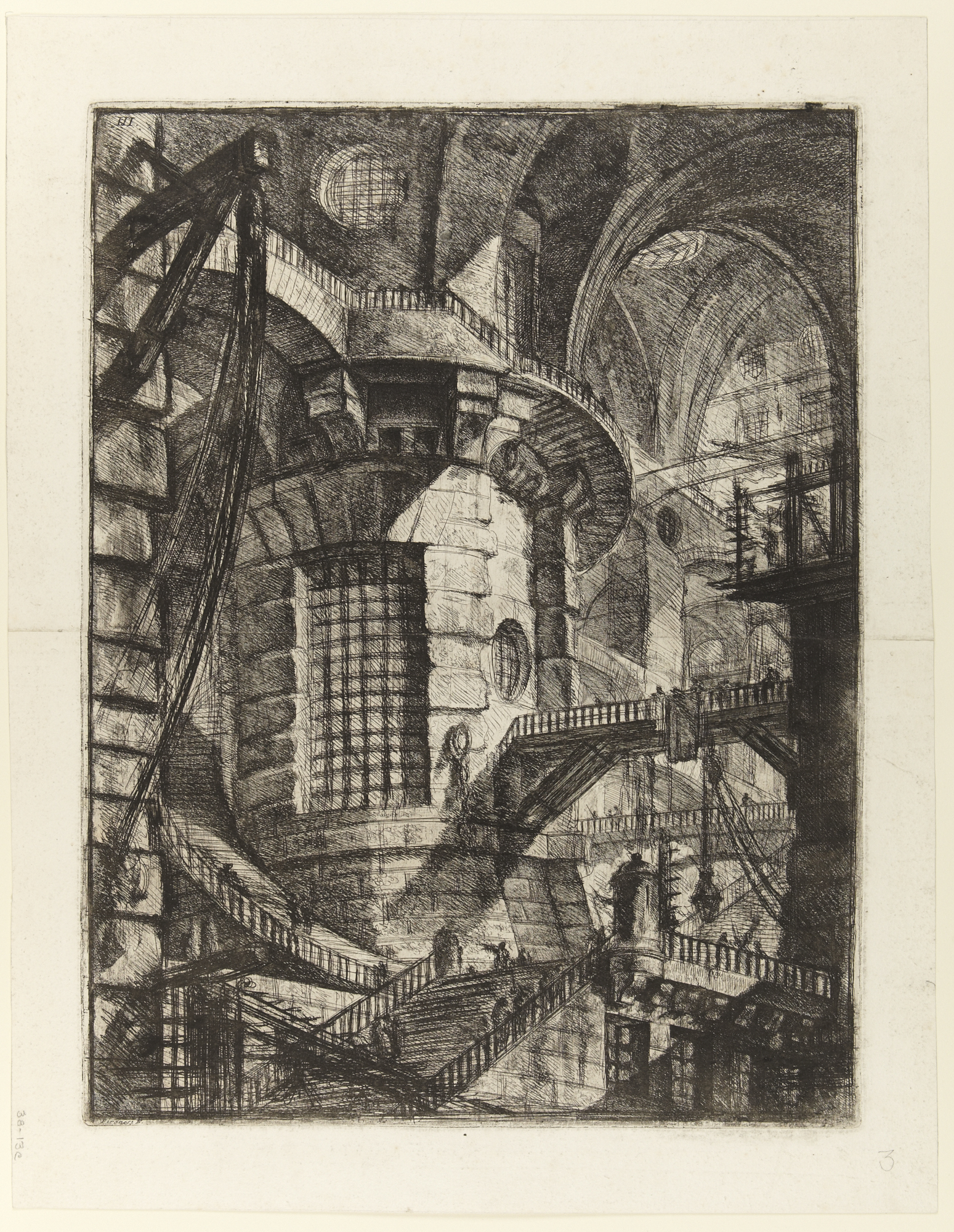
 Giovanni Piranesi. Le Carceri d’Invenzione: The Round Tower (1761).
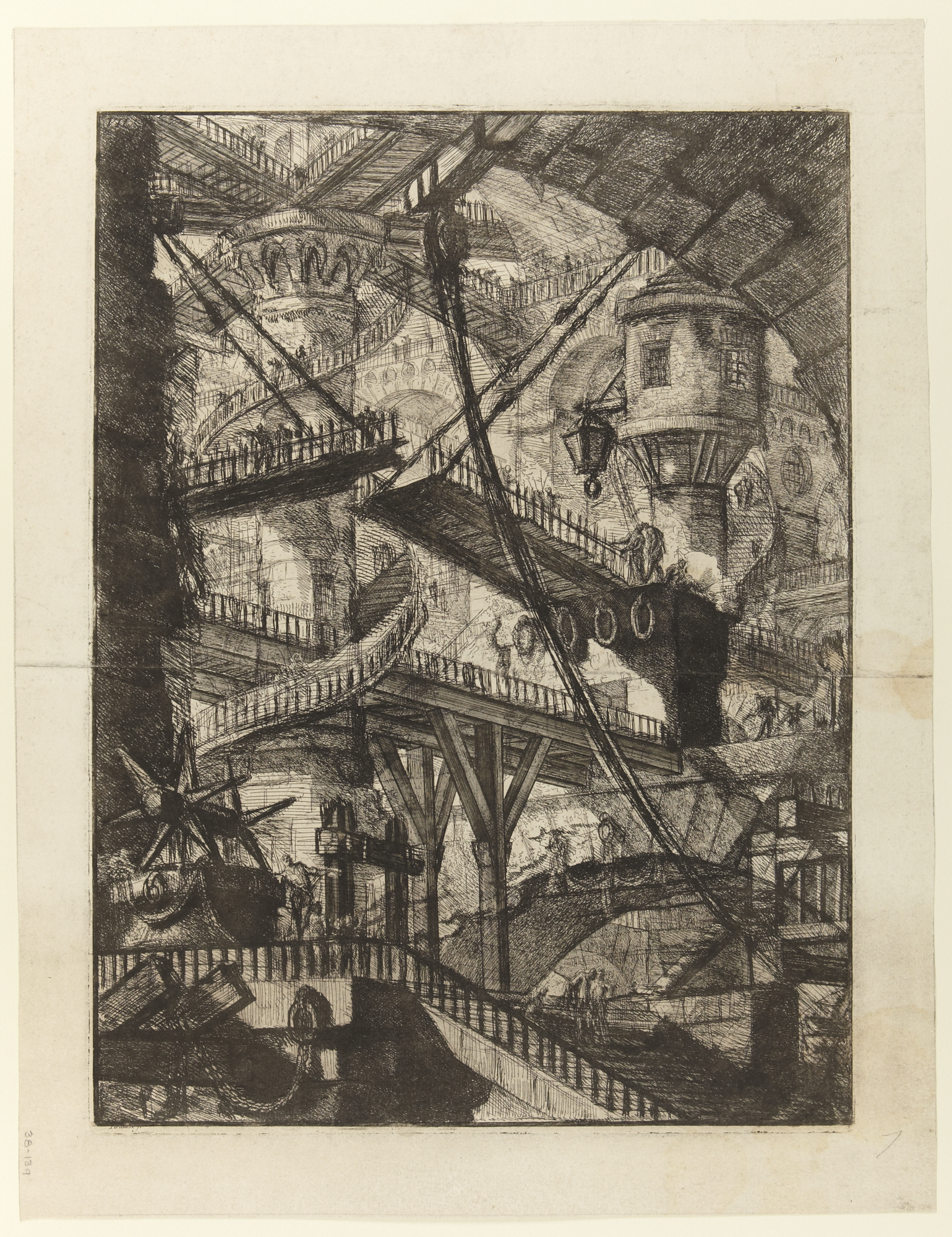 Giovanni Piranesi. Le Carceri d’Invenzione: The Drawbridge (1761).
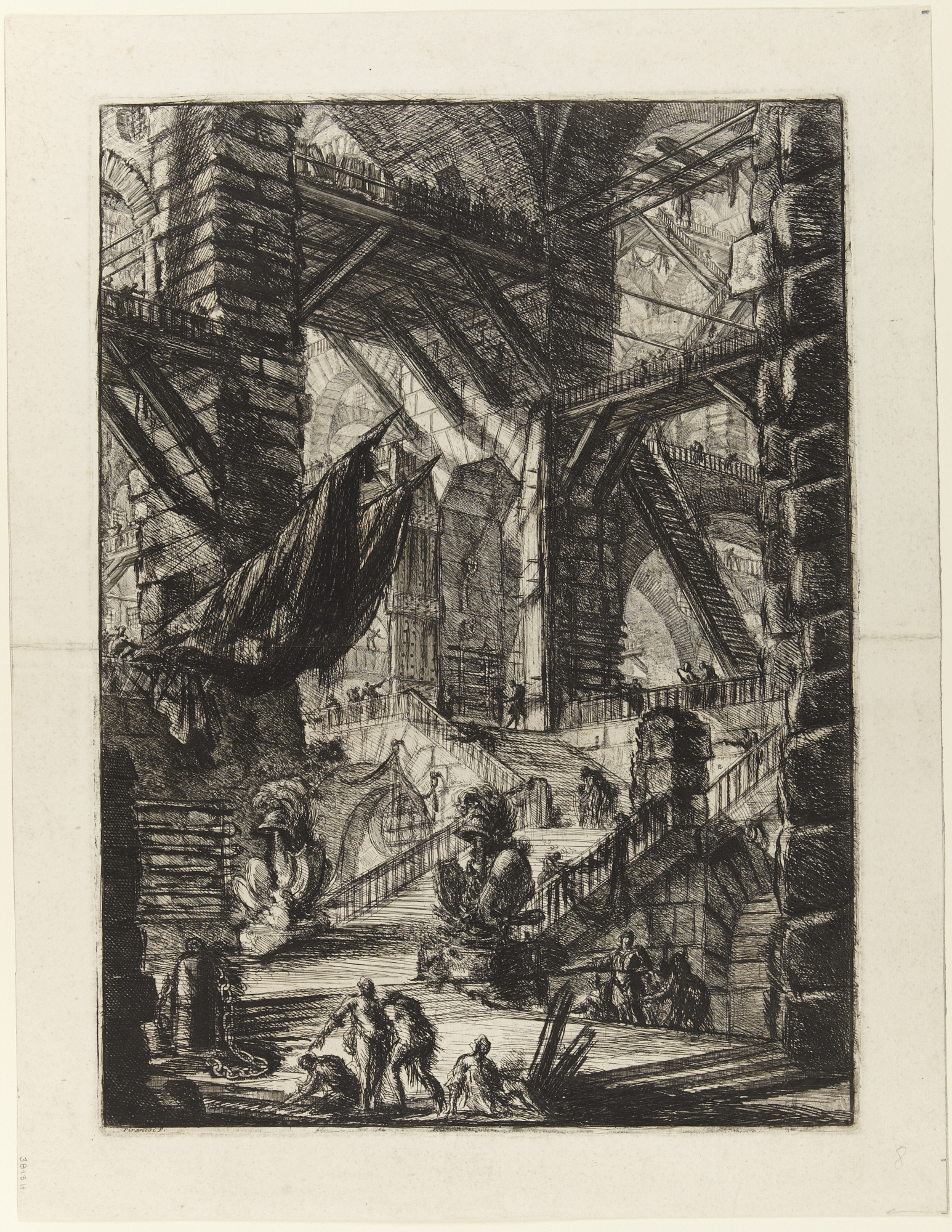 Giovanni Piranesi. Le Carceri d’Invenzione: The Staircase with Trophies (1761).
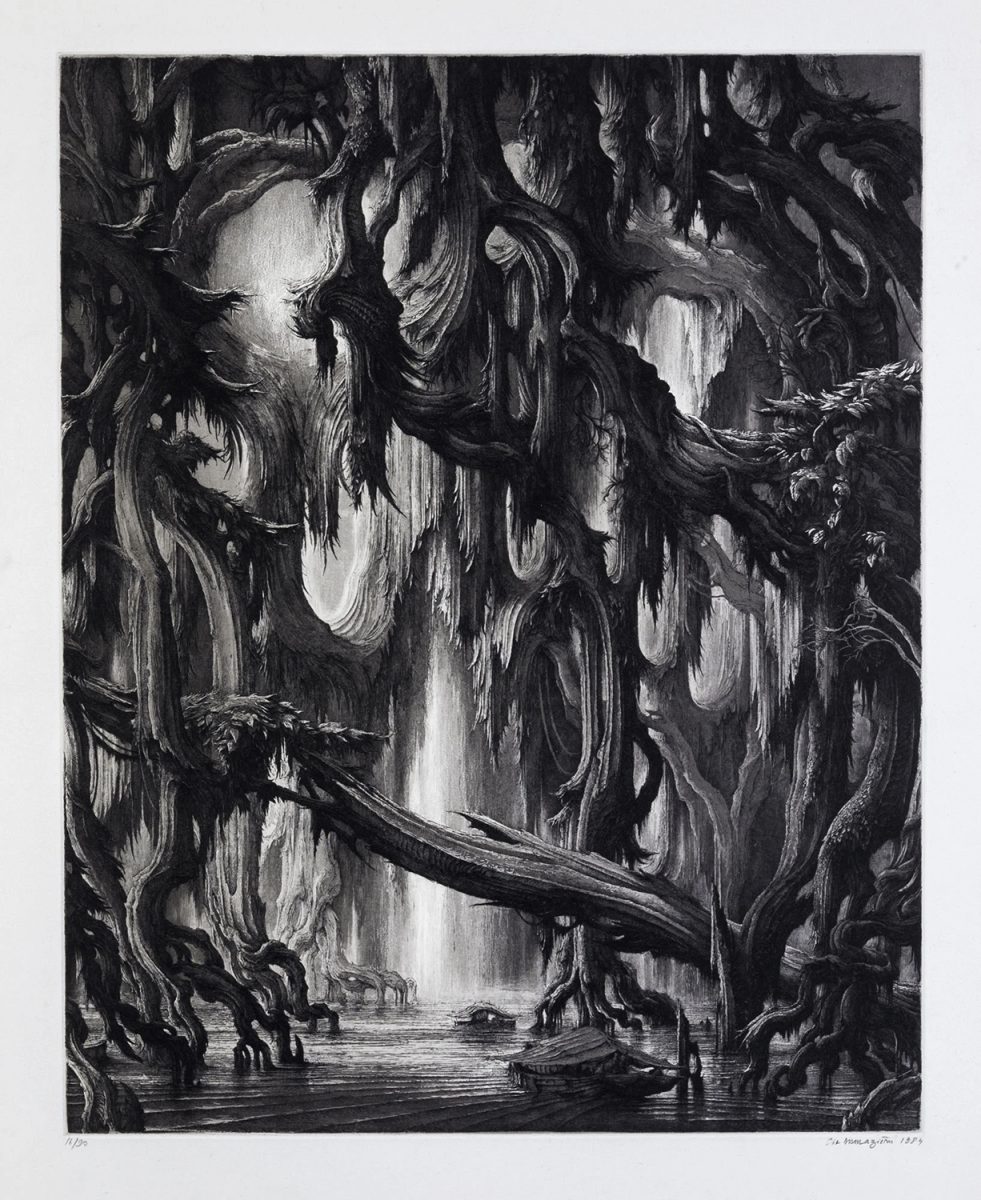
A strangeway describes the crooked, disjointed, or indirect path by means of which causal effects spiral outward tumultuously from their plural points of origin, traversing ontological modes and orders without regard to adequation or proportion. Examples are endless. Seriously attempt to backtrace or map out almost anything at all, and you’ll rapidly find yourself walking the strangeways. Take an object, like an artifact, a film, a love affair, a religion, or a war. Start reconstructing its conditions of emergence, and soon everything will start to proliferate and spiral outward. Welcome to R’lyeh. If you want to produce a clear and distinct formative narrative, with all your causes and effects in neat little rows, you’ll have to be a ruthless, perhaps even reckless editor of events. The alternative to such ruthless editing isn’t something fuzzy or vague (mere “blooming, buzzing confusion”), but, instead, the formally interminable redescription of swarming entities and submerged events, of objects both composed and shrouded by overlapping pathways of effect, wandering forever through flooded halls of echoes. These are the Piranesi worlds, lit with dark light. There are a thousand thousand more cross-cutting causal histories attached to every object than it seems, and each of these histories is a drowned labyrinth, a sunken ruin. You can dive deeper to get your salvage materials or a cool snapshot, but it’s always going to be a complex or even dangerous venture.